Ancient cultures had a remarkable obsession with dividing things into three. Greek thinkers split the soul into reason, spirit and appetite. Medieval physicians divided human experience into nutrition, sensation and reason. Countless religions rely on triads such as the Father, Son and Holy Spirit. The idea is simple: break something complex into smaller parts and hope those parts reveal the whole.
My experience of ADHD feels much the same. The idea that ADHD is simply a matter of distraction has always felt incomplete to me. Describing it as an attention deficit may be technically accurate, but it feels emotionally barren. I’ve spent years trying to understand what ADHD feels like, what it embodies, and the part it plays in my identity. The closest I’ve come to a meaningful definition is through a tradition thousands of years old: the rule of threes.
Neurodiversity touches almost every aspect of my life, but by exploring the chaos, the order and the beauty it brings, I can begin to describe my personal experience of ADHD.
Before order or beauty exist, there must be a state of chaos, as was the universe before the big bang or the world before civilised society. To depict the chaotic by-products of ADHD, I think of my mind as an auction house. Every morning, every waking hour, even as my fingers type out this work, my thoughts are placed on an auction block. There are sensible bidders, an essay I have to write, an article about my ADHD (which is presently winning), perhaps leaving bed to brush my teeth. The hectic atmosphere of the auction house really ensues, however, when the competition arrives, when bids are flying out for my attention, not based on the importance of the task, but how high the price offered is. I particularly struggled with this when my ADHD was first setting in. My thoughts had a cheap price, my mind often wandering. When I really should’ve been selling or offering my thoughts to my studies or personal life, auctions easily commenced, causing doomscrolling, worries about social media personas or even the curiosity around illegal drugs to easily capture my attention. This is where I find the basic definitions of ADHD misleading. A simple Google search tells you that ADHD involves a deficit of attention. I believe, to a greater extent, that the problem oftentimes isn’t a lack of attention – there’s no shortage of supply at the auction house – but more the choice with where to place this attention when it ebbs and flows, where to direct it. At its worst, my thoughts would be packed off and sold to whatever bidder or buyer could shout the loudest, create the most urgency or provide the most short-term gratification. As I’ve gotten older, the auction hasn’t stopped, if anything, the shouting is even louder as my day to day life becomes more enriched. I didn’t need to close down the auction, I just learnt to rig it. The goal was not to make the preferred bidder (like the one that told me to write this) shout louder, it was to give it a bigger budget. Recognising the importance and value of my own attention and thoughts was what helped me weather the initial years of my ADHD and make it through the chaos of the auction house.
After the storm, comes the calm. More specifically, the order and rigidity I’d been searching for during the beginnings of my ADHD. I’ve chosen to depict such order as a quantum particle. One of the least understood aspects of this neurodiversity is that it isn’t simply about attention, it’s about possibility. Most objects have a definite state. For example, a football can either be in the stands or on the pitch, it can’t be in both places at once. A quantum particle, on the other hand, can be in multiple states all at once. The example that originally helped me decipher this phenomenon was a spinning coin, the coin is neither definitely heads nor definitely tails from our perspective yet, so multiple possibilities are present at the same time. This near-perfectly encapsulated how my mind worked. Whilst doing revision, I’m simultaneously thinking about a videogame I want to finish, whilst thinking about what the football score may be, whilst thinking of some witty response to a text I got. Each possibility co-exists in my mind, competing for space. Choosing and managing these thoughts isn’t difficult because I’m indecisive, rather due to the fact that each thought or idea genuinely interests me, allowing them to all exist simultaneously in my mind. However, the biggest drawback to the beauty that the quantum particles in my mind allow is the sense of abandonment. Even though I’d weathered the storm of the auction house and found a space in my mind where thoughts could arise interwoven, selecting paths became a troublesome process. Choosing a certain option – such as my A levels – doesn’t just mean choosing it, it means abandoning dozens of other options. This characteristic of my ADHD brought me a grave fear of regret, like each selection made in my life came with an opportunity cost or sacrifice that I could never get back. I believed that focusing on one sole interest meant indefinitely drifting away from countless others. These trade-offs seem obvious to many. For me, it sometimes feels like the rubbing out of entire futures, the collapse of the quantum particle. Overcoming these worries required a change of perspective. Instead of fixating on how choices may impact me, I learned to appreciate the excitement and curiosity each decision fueled about the world around me. The quantum particles of my mind have me staring down millions of opportunities, more than I could ever explore in a lifetime. The challenge of my ADHD, then, isn’t a shortage of ideas, but learning – as I still am – that nobody can pursue all possibilities at once. A quantum particle eventually settles into a single state, every momentous thing I will ever achieve in my life will come from letting another opportunity pass by, and that is beautiful.
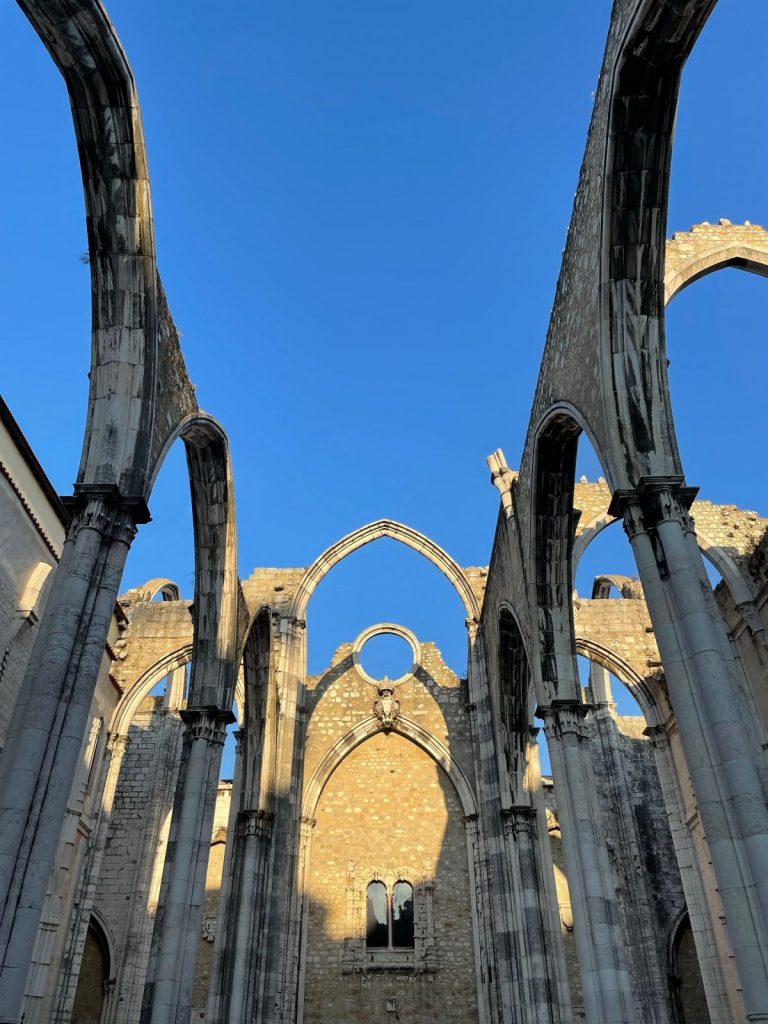
We finish with the beauty. The landscape of my neurodiverse brain is vast, yet I like to think that the horizon is dotted with unfinished cathedrals. From a distance, the skyline might look messy, with half-built spires or winding staircases leading nowhere. However, cathedrals aren’t built by accident. Each one has begun with a moment of wonder. Someone looks at an empty patch of grass and imagines something far grander to take its place. ADHD has filled my life with those moments with a constant flow of new ideas, new urges to master my craft, and daring new plans. The vast majority are never completed. Some barely ever leave the blueprints, and although they may look strange or deserted, I find it incredibly difficult to regret them. In my youth, I used to believe that the existence of an unfinished cathedral – a challenge I never finished or a skill I never learnt – was proof of failure,I would tear the structures down, never letting myself remember what I couldn’t do. However, a real measure of a cathedral – of an idea or thought – isn’t whether it’s finished, but if it was worth building at all. Now when I look across the rolling landscape of my mind, I don’t see a bunch of unfinished buildings, I see evidence of curiosity, I see clear-cut proof that I believed I could build something so much larger than myself, I see beautiful finished cathedrals that I never would’ve dreamed of starting, I see cathedrals that I’m still constructing or perfecting today. ADHD has filled the horizon of my mind to the brim with buildings I never would’ve dreamt up otherwise. If my skyline is bustling with half-built stained glass windows or incomplete towers, maybe it isn’t just a record of things I’ve left unfinished. Perhaps it’s more a testament to how often ADHD has inspired me to build.